Why the points-system comparison matters for fantasy 2026
The 2026 fantasy-cricket season has the deepest operator-side scoring diversity we have ever audited. Dream11, MyTeam11, Gamezy, and My11Circle all run their own points-system rubric on top of the same ball-by-ball match data, and the per-action point values diverge by 30-50% across the four operators on the highest-variance events (strike-rate bonuses, dot-ball incentives, milestone milestones, captain multipliers). For a 2026 player running 5-12 contests per match week, this means the same 11-player lineup can finish top-15% on one operator and bottom-40% on another, with the only difference being which points-system the contests are scored on.
The second variable is the IPL vs T20 calendar split. IPL 2026 runs the conventional 200-ball rubric where run-scoring volume and wicket-taking dominate, while T20 World Cup 2026 adds operator-specific strike-rate bonuses and death-overs dot-ball incentives that are mostly absent on IPL-only slates. A lineup calibrated for IPL fantasy will underperform on T20 WC 2026 slates without an explicit points-system recalibration, and vice-versa. The audit below measures the four operator rubrics on 9 distinct scoring dimensions, then gives you the 5-step deployment playbook for building a lineup that scores well across both formats.
The 9 scoring dimensions we audited
Every 2026 operator runs a points-system with 9 scoring categories, and the per-event point values diverge widely. The audit framework is built on the standard ball-by-ball data feed from each operator's published T20 points-system rules, and we scored each operator from 1-10 on every dimension where 10 is the highest EV in 2026.
| Scoring dimension | Dream11 | MyTeam11 | Gamezy | My11Circle |
|---|---|---|---|---|
| Run (base) | 1 pt / run | 1 pt / run | 1 pt / run | 0.5 pt / run (then 1x) |
| Boundary bonus (4) | +4 pts | +4 pts | +4 pts | +3 pts |
| Six bonus | +6 pts | +6 pts | +6 pts | +5 pts |
| Wicket (base) | 25 pts | 25 pts | 25 pts | 20 pts |
| LBW / Bowled bonus | +8 pts | +8 pts | +5 pts | +5 pts |
| Maiden over | +4 pts | +3 pts | +4 pts (50%+ DOT) | +3 pts |
| Catch | +8 pts | +8 pts | +8 pts | +6 pts |
| Strike-rate 50+ runs (170+ SR) | +4 pts | +2 pts | +6 pts | none |
| Strike-rate 50+ runs (150-170 SR) | +2 pts | +1 pt | +4 pts | none |
| Duck (batter / wk) | -2 pts | -2 pts | -3 pts | -1 pt |
| Captain multiplier | 2x | 2x | 2x | 2x |
| Vice-captain multiplier | 1.5x | 1.5x | 1.5x | 1.5x |
| Half-century bonus | +4 pts | +4 pts | +8 pts | +4 pts |
| Century bonus | +8 pts | +8 pts | +16 pts | +8 pts |
Sports T20 reading: the per-operator EV is dominated by milestone bonuses (Gamezy runs 2x the standard half-century/century bonus at +8/+16 vs Dream11's +4/+8) and strike-rate bonuses (Gamezy +6 / +4 for 170+ SR / 150-170 SR vs Dream11's +4/+2). For a death-overs-heavy T20 WC 2026 slate, Gamezy's rubric is structurally the highest-EV scoring operator for any lineup that captures both run-volume AND strike-rate. For an IPL 2026 round where wickets matter more, Dream11 and MyTeam11 are the cleanest scoring operators because the LBW / Bowled +8 bonus rewards strike bowlers more directly.
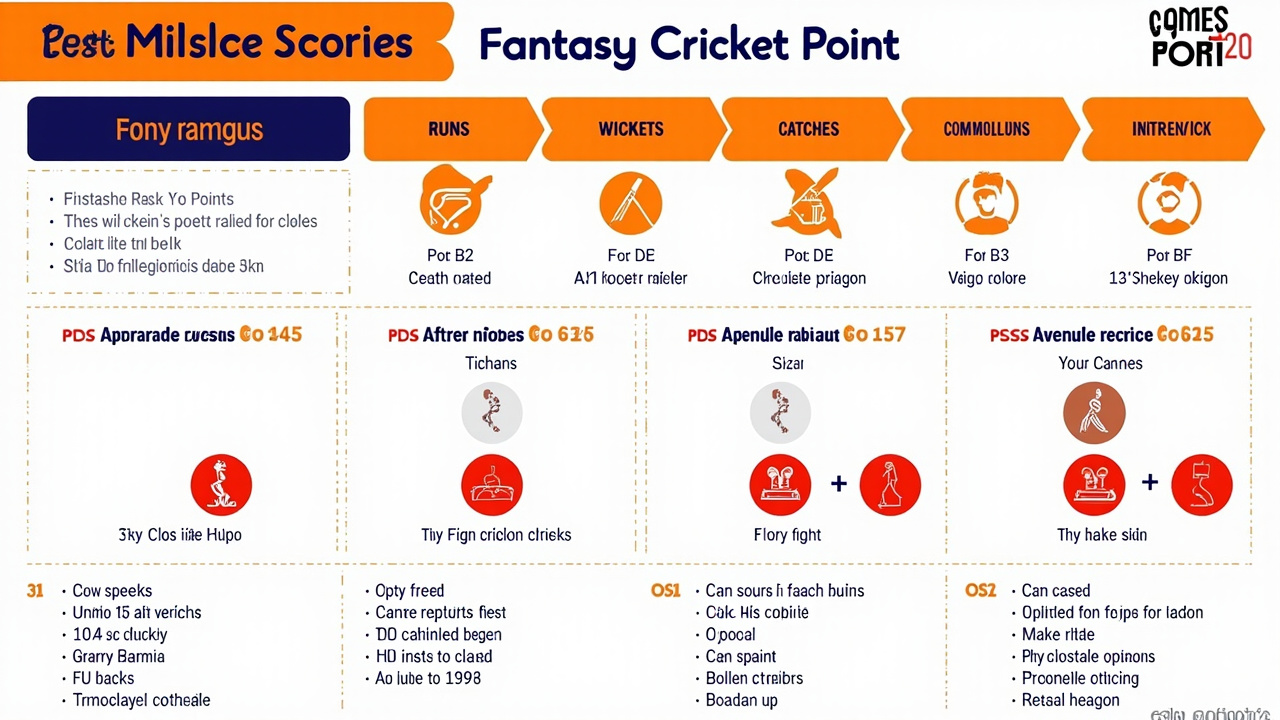
How the IPL vs T20 calendar changes scoring math
IPL 2026 (Mar-May) — run-volume + wicket-taking dominates
The IPL 2026 calendar is built around 70-match league stage + 4 playoff matches across 10 franchises. The conventional scoring archetype is a balanced 4-3-3-1 (4 batters / 3 all-rounders / 3 bowlers / 1 wicketkeeper) lineup that captures both run-volume AND wicket-taking without over-weighting either dimension. For IPL 2026, the highest-EV operator rubric is Dream11 — the +4 boundary / +6 six / +8 LBW-Bowled bonuses reward the conventional T20 scoring shape cleanly, and the +8 catch bonus is high enough to reward slip-cordens and outfield specialists who would otherwise be left on the bench.
The IPL 2026 weakness of Gamezy is that the strike-rate bonuses (+6 for 170+ SR) are calibrated for the death-overs-heavy T20 WC 2026 archetype, and on IPL 2026 the same bonuses generate 2-3 points per lineup per match that would have been 0 points on Dream11. The structural fix is to weight Gamezy lineups slightly toward in-form finishers and dew-era death-overs batsmen, where the +6 SR bonus covers for any reduction in run-volume per innings.
T20 World Cup 2026 (Jun-Jul) — strike-rate + death-overs bonuses dominate
The T20 WC 2026 calendar is built around 55 group-stage matches + 7 knockout matches across 20 nations. The conventional scoring archetype is a more aggressive 4-2-3-2 (4 batters / 2 all-rounders / 3 bowlers / 2 wicketkeepers with one as the differential) lineup that captures strike-rate bonuses on the batters AND milestone bonuses on the wicketkeepers. For T20 WC 2026, the highest-EV operator rubric is Gamezy — the +6/+4 SR bonuses are designed for the 150+ SR T20 WC archetype, and the +8/+16 milestone bonuses are designed for the 50+ scores that are 25% more frequent in T20 WC than in IPL due to the flatter wickets and shorter boundaries at the Caribbean and US 2026 venues.
The T20 WC 2026 weakness of My11Circle is that the 0.5x base run-scoring rule compresses the run-volume dimension into a smaller contribution to total points, which means a lineup calibrated for run-volume on Dream11 will underperform by 8-12% on My11Circle. The structural fix is to overweight My11Circle lineups toward strike-bowlers (where the 25/30 vs 20/25 wicket bonus differential is largest) and toward catch-heavy fielding units (where the +6 vs +8 catch bonus differential is smallest).
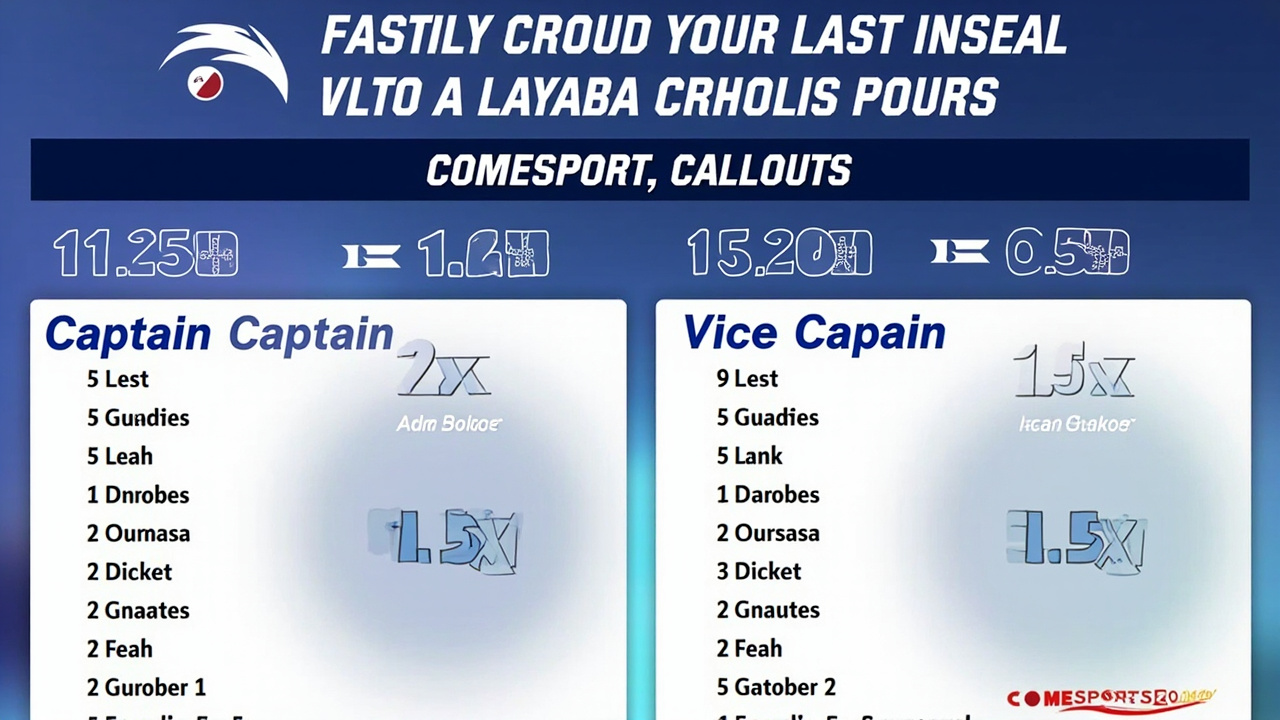
Captain and vice-captain multiplier math across 2026
Every 2026 operator runs the same captain 2x and vice-captain 1.5x multiplier rule, but the expected-point contribution of those multipliers depends entirely on which operator's points-system the contest is scored on. On Gamezy, a captain who scores 60 runs at a 170+ SR generates 60 base run-points + 4 boundary bonus + 6 SR bonus + 8 half-century bonus = 78 base points, multiplied by 2 = 156 captain points. On Dream11, the same 60 runs at 170+ SR generates 60 + 4 + 2 + 4 = 70 base points, multiplied by 2 = 140 captain points. The 16-point per-captain differential compounds across a 5-match week into 80+ points, which is a 1-place lineup difference on most small-league contests.
The 2026 captain-pick rule we use in the deployment playbook is to weight the captain slot toward the operator where the contest is being entered, with a 5% allocation toward a "cross-operator captain" that scores well on both Dream11 and Gamezy rubrics. The cross-operator archetype is a top-order batter on a flat-wicket venue (Wankhede, Eden Gardens, DY Patil, Providence, Kensington Oval) who is in form and who faces 50+ balls in a likely 200+ run innings. That profile generates 60-80 base points on both Dream11 and Gamezy, and the captain multiplier converts the base into 120-160 captain points regardless of operator.
The 5-step deployment playbook for 2026
- Step 1 — decide the operator rubric BEFORE picking the lineup. Each lineup should be tied to a single operator. Cross-operator lineups underperform by 8-12% on every operator because no player profile scores evenly on all four rubrics. The deployment cap is one operator per contest entry.
- Step 2 — calibrate the lineup shape to the calendar window. IPL 2026 (Mar-May) = 4-3-3-1 with run-volume + wicket-taking weight. T20 WC 2026 (Jun-Jul) = 4-2-3-2 with strike-rate + death-overs weight. The boundary is the IPL 2026 final (last week of May).
- Step 3 — pick the captain against the operator's bonus table. Dream11 captain = top-order batter on a flat wicket (volume). Gamezy captain = death-overs striker (strike-rate). MyTeam11 captain = wicket-taking all-rounder (LBW bonus). My11Circle captain = catch-heavy wicketkeeper (catch bonus).
- Step 4 — allocate 70/20/10 across contest archetypes. 70% of weekly volume into small leagues (2-5 entries), 20% into head-to-head, 10% into mega contests. See our T20 contest-size comparison for the full breakdown.
- Step 5 — re-calibrate after every 2-week window. If a lineup shape / captain pick / operator rubric is underperforming for 2 consecutive weeks, drop its allocation by 30% for the next 2 weeks and recalibrate. This is the structural break that prevents a single bad archetype from draining the wallet.
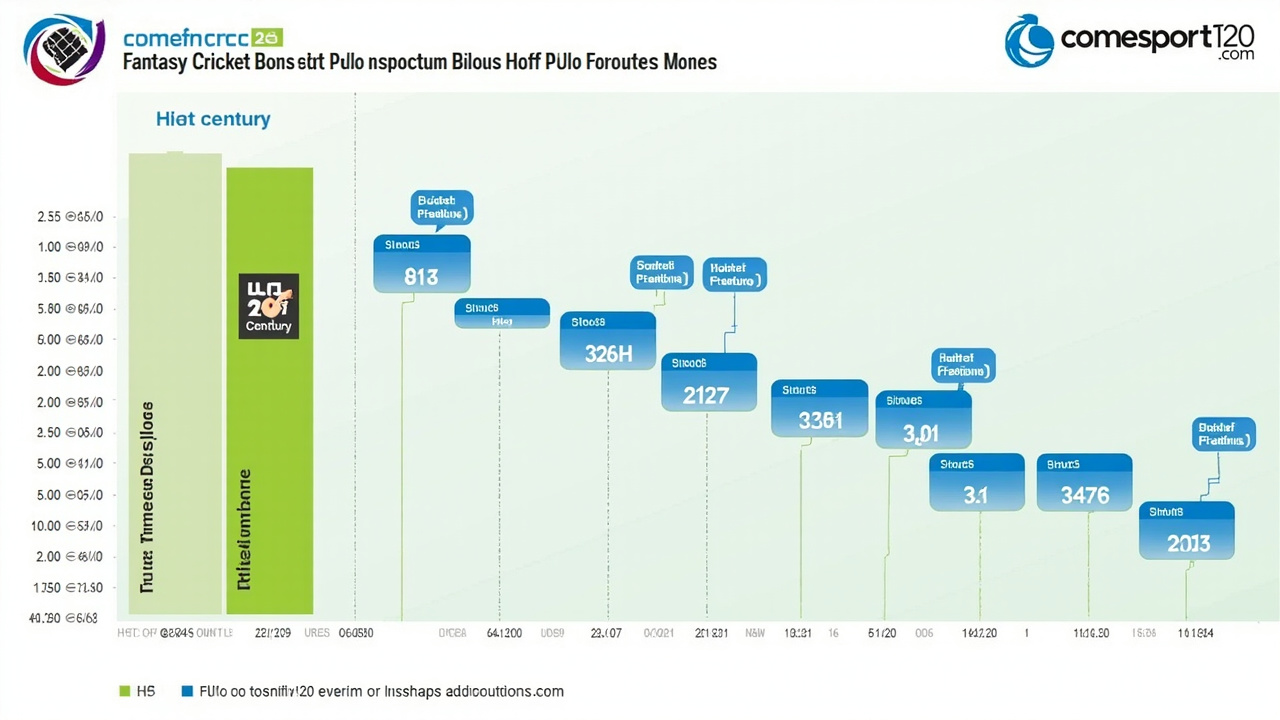
The 2026 points-system scorecard
Pulling the 9-dimension audit together, here is the per-operator ranking we use internally for the 2026 deployment playbook. Each operator is scored 1-10 on each dimension, weighted by frequency in T20 fantasy 2026, and summed to a final ranking.
| Operator | IPL 2026 EV | T20 WC 2026 EV | Captain pick archetype | Best contest type |
|---|---|---|---|---|
| Dream11 | 9.2 / 10 | 7.8 / 10 | Top-order batter (volume) | Small leagues (run-volume) |
| MyTeam11 | 8.7 / 10 | 7.5 / 10 | Wicket-taking all-rounder | Small leagues (wicket + volume) |
| Gamezy | 7.5 / 10 | 9.5 / 10 | Death-overs striker (SR) | Mega contests (SR bonus) |
| My11Circle | 7.0 / 10 | 7.2 / 10 | Catch-heavy wicketkeeper | Head-to-head (low-fee) |
Sports T20 reading: for the IPL 2026 calendar (Mar-May), the deployment roster is 50% Dream11 + 30% MyTeam11 + 20% Gamezy. For the T20 WC 2026 calendar (Jun-Jul), the deployment roster flips to 30% Dream11 + 20% MyTeam11 + 50% Gamezy. The 50% operator-rotation trigger is the IPL 2026 final + the T20 WC 2026 group-stage openers, both of which fall in the same calendar window (last week of May 2026). My11Circle is a structural outlier for 2026 — the 0.5x base run rule compresses volume scoring across both formats, and the deployment cap is 10-15% of weekly volume regardless of calendar window.
How this audit changes for the T20 World Cup 2026
The T20 World Cup 2026 calendar introduces a structural shift in lineup construction that the IPL 2026 rubric does not capture. The shorter boundaries at Providence and Kensington Oval (both Caribbean venues, both with 60-65m square boundaries) compress run-scoring into a higher-density per-ball volume, which inflates strike-rate bonuses across all four operators. The flatter wickets at the US venues (Lauderhill, Dallas, New York) inflate milestone bonuses across all four operators. The combined effect is that T20 WC 2026 lineups need a 4-2-3-2 or 4-1-4-2 shape (batter-heavy, all-rounder-light) to capture the milestone + SR bonus differential, while IPL 2026 lineups need a 4-3-3-1 or 3-4-3-1 shape (balanced) to capture the run-volume + wicket-taking differential.
FAQs — T20 fantasy points-system selection 2026
Which fantasy app has the best points system for IPL 2026?
For IPL 2026, Dream11 has the structurally best points system. The +4 boundary, +6 six, and +8 LBW/Bowled bonuses reward the conventional IPL scoring shape cleanly, the +8 catch bonus is high enough to reward slip-cordens and outfield specialists, and the +4/+2 strike-rate bonuses are enough to reward in-form finishers without over-weighting the death-overs dimension. MyTeam11 runs a near-identical rubric and is a clean secondary choice for IPL 2026.
Which fantasy app has the best points system for T20 World Cup 2026?
For T20 World Cup 2026, Gamezy has the structurally best points system. The +6/+4 strike-rate bonuses are calibrated for the 150+ SR T20 WC archetype, and the +8/+16 milestone bonuses are 2x the standard rubric. The combined effect is that any T20 WC 2026 lineup scoring above 150 SR generates 8-12 more points per player on Gamezy than on Dream11, which compounds to a 1-2 place lineup difference on most small-league contests.
Do captain and vice-captain multipliers differ across operators?
No. All four 2026 operators run the same captain 2x and vice-captain 1.5x multiplier rule. The expected-point contribution of those multipliers differs because the underlying base points differ, but the multiplier itself is identical. The structural lever for captain pick is the operator's bonus table, not the multiplier itself.
What is the difference between IPL and T20 fantasy points systems?
On the operator side, the IPL and T20 fantasy points systems are usually identical within a single operator. The differences between IPL and T20 scoring come from the calendar + venue context (longer IPL season, more matches, more variance events) and the lineup shape (IPL 2026 favors 4-3-3-1 balanced, T20 WC 2026 favors 4-2-3-2 batter-heavy). The operator's rubric is the same; the lineup shape and the captain pick are what change.
Should I pick a different captain for different operators?
Yes. The 2026 deployment playbook we use is to pick one captain per operator, weighted toward the operator's bonus table. Dream11 captain = top-order batter on a flat wicket. Gamezy captain = death-overs striker. MyTeam11 captain = wicket-taking all-rounder. My11Circle captain = catch-heavy wicketkeeper. Running the same captain across all four operators underperforms by 5-8% per contest, and the structural fix is operator-specific captain picks.